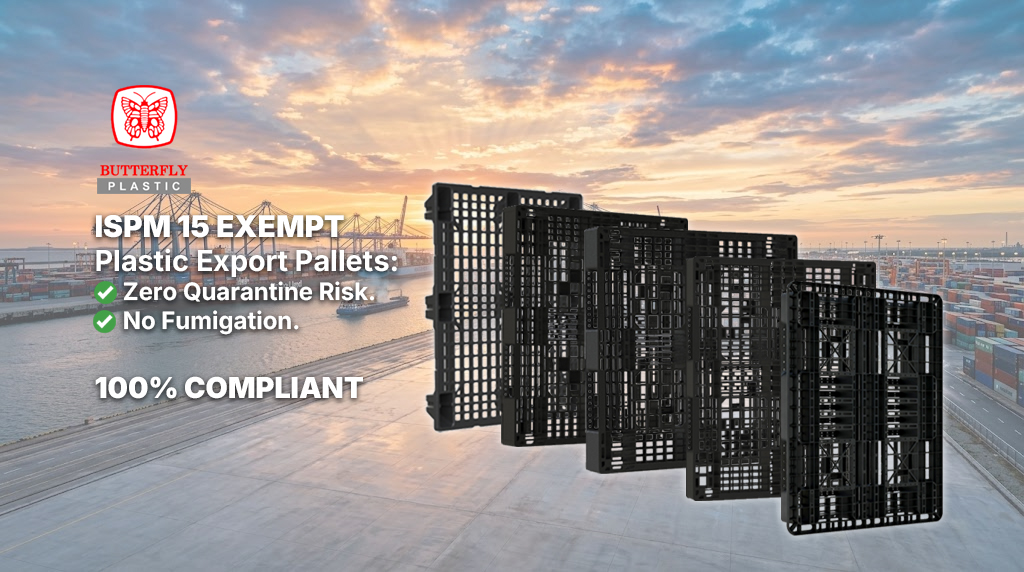
If your company exports manufactured goods, food products, chemicals, or electronics overseas, you already know that international shipping regulations can make or break your delivery timeline. Among these regulations, ISPM 15 (International Standards for Phytosanitary Measures No. 15) is one of the most strictly enforced global customs standards.
A single non-compliant pallet can result in your entire shipping container being quarantined, returned to port at your expense, or even ordered for destruction by foreign biosecurity authorities. For Malaysian and regional exporters, navigating timber treatment certificates, blurred IPPC stamps, and moisture damage has become a costly headache.
Fortunately, there is a proven, frictionless alternative: high-impact plastic export pallets. In this comprehensive B2B guide, we break down ISPM 15 regulations and explain why switching to plastic pallets is the smartest operational decision for global exporters.
What is ISPM 15 and Why Does it Exist?
ISPM 15 is an international phytosanitary measure developed by the International Plant Protection Convention (IPPC), an arm of the United Nations Food and Agriculture Organization (FAO). Its primary purpose is to stop the international transmission of wood-boring pests, timber diseases, and invasive insects (such as the Asian Longhorned Beetle and Emerald Ash Borer) via raw wood packaging materials.
Today, over 85 countries worldwide—including the United States, all European Union nations, Australia, New Zealand, China, Japan, and the United Kingdom—strictly enforce ISPM 15 compliance at every border inspection post.
The Mandatory Requirements for Wooden Pallets
Under ISPM 15, all solid raw wood packaging must undergo approved phytosanitary processing before export:
- Heat Treatment (HT): The wood core must be heated to a minimum temperature of 56°C for at least 30 continuous minutes.
- Dielectric Heating (DH): Heating the timber core using microwave technology.
- Methyl Bromide (MB) Fumigation: Chemical gas treatment (though increasingly restricted or banned worldwide due to environmental and health hazards).
- Official IPPC Stamp: Treated wood must be visibly branded with an official IPPC wheat stamp displaying the country code, producer number, and treatment code.
The 3 Hidden Risks of Exporting with Wooden Pallets
1. Port Quarantine and Container Rejections
Customs officers at major destination ports (such as Long Beach, Rotterdam, or Sydney) inspect wood packaging rigorously. If an IPPC stamp is smudged, illegible, missing, or if living insects are detected inside treated timber cracks, the entire container is flagged. The penalties are devastating:
- Mandatory re-fumigation at destination port charges ($1,500 – $4,000+ USD).
- Demurrage and container detention fees accumulating daily.
- Outright cargo rejection and mandatory re-exportation.
2. Moisture Absorption, Mold, and Cross-Contamination
Wood is a porous, hygroscopic material that naturally absorbs humidity during 20-to-40-day ocean freight journeys. In humid equatorial shipping lanes around Southeast Asia, moisture levels in wood pallets easily exceed 20%, triggering rapid growth of mold, mildew, and fungi. For pharmaceutical, cleanroom, food, and electronics exports, mold contamination often means immediate cargo write-off.
3. Recurring Operational and Treatment Expenses
Heat treatment and chemical certificates are not permanent. As wooden pallets sit in local transit or outdoor yards, they can be re-infested, requiring repeated treatment cycles. In contrast, plastic pallets require zero treatments over their entire lifecycle.
The Plastic Pallet Solution: 100% Automatic ISPM 15 Exemption
The simplest and most reliable way to comply with ISPM 15 is to use packaging materials that are legally exempt from the regulation.
Official IPPC Regulation Status: According to ISPM 15 Section 2.1, packaging made entirely of non-wood materials—including plastic polymers (PP, HDPE), polyurethane, and metal—is completely exempt from all ISPM 15 requirements, heat treatments, fumigation, and IPPC stamping.
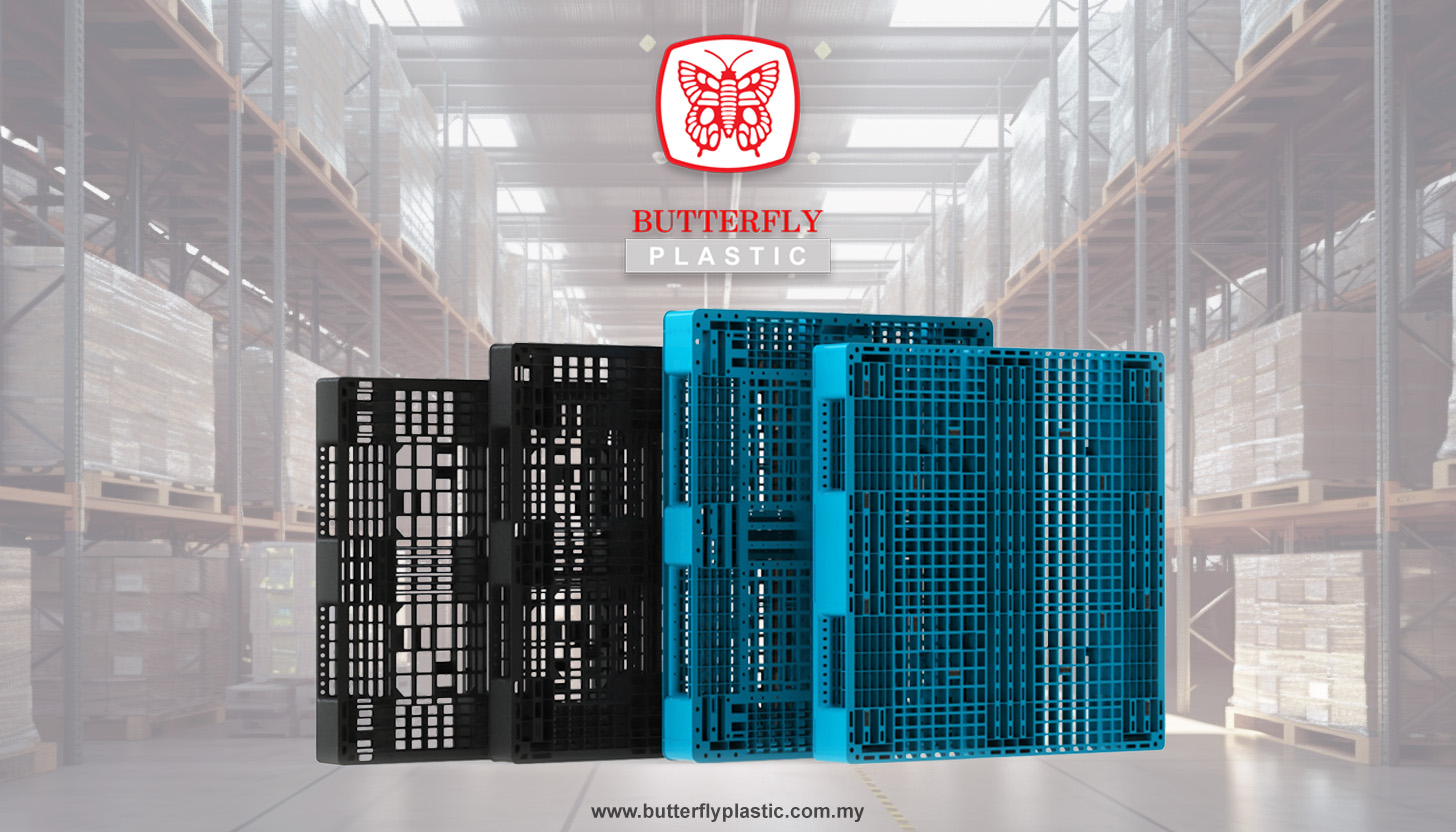
Because plastic pallets manufactured by Butterfly Plastic (Teo Mah Poh Plastic Industry Sdn Bhd) are moulded from engineered polypropylene (PP) and high-density polyethylene (HDPE), they are completely sterile, pest-inert, and non-porous. They bypass customs inspection lanes with zero paperwork, zero treatment certificates, and zero delays.
Comparison: Plastic Pallets vs. Wooden Pallets for Export
| Export Factor | Wooden Export Pallets | Butterfly Plastic Export Pallets |
|---|
| ISPM 15 Compliance | Requires HT / MB treatment + stamp | 100% Automatically Exempt |
| Customs Quarantine Risk | High (stamp errors, mold, pests) | Zero Quarantine Risk |
| Moisture & Weather Resistance | Absorbs water, prone to rotting & mold | 100% Water-resistant, washable, mold-free |
| Tare Weight (Air / Sea Freight) | Heavy (18 kg – 28 kg+ variable) | Lightweight & Consistent (7 kg – 14 kg) |
| Nesting Efficiency in Containers | Blocky; takes up full container volume | Nestable 9-leg design saves up to 60% space |
| Safety & Handling | Nails, splinters, broken boards | Smooth edges, zero nails, 4-way entry |
| Sustainability & ESG Audits | Deforestation impact, single-use disposal | 100% Recyclable Eco-PP / Closed Loop |
Top Plastic Pallet Models for Global Export
When selecting plastic pallets for export, warehouse managers typically prioritize low tare weight (to reduce freight costs), high nesting density (to maximize shipping volume), and four-way forklift compatibility. Here are the most widely specified models:
1. Lightweight 9-Leg Nestable Pallet (Model 5018 & Model 5022)
- Standard Dimensions: 1200 x 1000 x 120 mm / 1220 x 1016 x 130 mm
- Weight: Only ~7.8 kg (significantly cuts air cargo and LCL surcharges).
- Design: 9 block support feet allowing pallets to nest inside one another when empty, saving up to 60% of return shipping and warehouse storage volume.
- Best For: One-way export shipments, air freight cargo, FMCG, and electronics packaging.
2. Heavy-Duty Medium Racking Pallet (Model 5024 & Model 5023 Series)
- Standard Dimensions: 1200 x 1000 x 160 mm
- Static Load: Up to 4,000 kg | Dynamic Load: Up to 1,500 kg
- Design: Perimeter base and reversible solid decks engineered for warehouse racking, heavy chemical drums, and reusable cross-border logistics.
- Best For: Heavy industrial export, automotive parts, and bulk agricultural cargo.
Conclusion: Eliminate Export Risk by Sourcing Factory-Direct
In global trade, predictable lead times and reliable border clearance are everything. Relying on wooden pallets with recurring ISPM 15 compliance risks exposes your export operation to avoidable port holds, unexpected fumigation bills, and cargo damage.
By partnering directly with Teo Mah Poh Plastic Industry Sdn Bhd (Butterfly Plastic), you gain access to:
- Factory Direct Wholesale Pricing: Buy straight from our manufacturing facility in Ipoh, Perak with no middleman markup.
- Immediate Stock Availability: Large warehouse inventory ready for immediate containerized dispatch.
- Custom Hot-Stamping & Branding: In-house company logo printing and serial numbering to secure corporate supply chains.
- Full Export Assurance: Certified ISO 9001:2015 production quality with zero ISPM 15 documentation required.
Ready to Streamline Your Export Logistics?
Contact our technical sales team today to request wholesale factory pricing, container loading calculations, or tailored export pallet recommendations.